

decide game:
QUANTUM TECHNOLOGIES
Group 5 – Participant 5
Story cards
Read all the cards from this category, choose the one that looks more interesting to you and explain it to the rest of the group.

clara caballero
Story Card 4
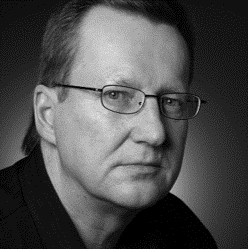
I work for a quantum information research group at ICFO, are search centre in Castelldefels, near Barcelona, although we collaborate with people from all around the world.
In addition to promoting scientific and technological research, I think it is important to tell people about how the latest scientific advances can affect their lives.
In 2016, we coordinated an international project to conduct a quantum physics experiment with the collaboration of the public. More than 100,000 people took part in the Big Bell Test!
manuel moreno
Story Card 10
I am a pharmacist and in my work it is essential for my scales to be precise to prepare prescription medicines. For this reason, I recalibrate them every year. When I did it in 2019, I was told that the definition of a kilogram in the International System of Units had changed. The definition of the unit of weight used worldwide is now based on a universal constant, the Planck constant, which plays a fundamental role in quantum physics.

Pol Pérez
Story Card 20
I am an architect. With climate change, energy efficiency is one of my biggest concerns when designing buildings heating and cooling account for a huge part of a building's carbon footprint. I recently attended a conference where researchers presented new quantum-designed materials that can switch between transparent and opaque depending on temperature, drastically reducing the need for air conditioning.
I had never connected quantum physics to architecture before. It made me realise how far the ripple effects of fundamental research can reach.
info cards
Read all cards from this category, choose the two that look more interesting and explain them to the rest of the group.

measurement
Info Card 4
In quantum physics, measurement means extracting information from a system in some way.
Measuring a quantum system can change its state: for example, polarisation measurements can switch the polarisation from vertical to horizontal.
Contrary to what happens in the macroscopic world, in quantum physics the order of measurements can vary the final result.
Applications: increasing the security of cryptography. The inevitable effect of measurement on a particle's state may be evidence of a spy's presence.

tunnel effect
Info Card 11
Imagine a ball in a bowl. It can escape the bowl only if we push it with sufficient energy; otherwise, it will get to a certain height and fall back.
At quantum scale, particles can overcome certain barriers even if they do not have enough energy. It is as if a tunnel allowed them to cross the barrier without expending energy (tunnel effect).
Applications: electron microscopy (a very thin metal point is placed near a surface and "rips" electrons through the tunnel effect.)

Quantum memories
Info Card 29
Quantum memories allow quantum states to be stored in a controlled manner and retrieved on demand without losing their fragile quantum properties. They act as temporary buffers for quantum information, enabling it to be preserved and coordinated in time. Quantum memories are a key component of quantum repeaters, which extend the distance of quantum communication, and they play a central role in synchronising operations across complex quantum networks.

Superconductivity
Info Card 32
Superconductivity is a phenomenon in which certain materials conduct electricity with zero electrical resistance when cooled below a critical temperature. As a result, electric currents can flow without any energy loss.
Superconductors are widely used in technologies such as MRI scanners, particle accelerators, and experimental quantum computers. They also make it possible to generate extremely strong magnetic fields and to build ultra‑sensitive detectors.
thinking cards
Read all the cards from this category, choose the one that looks more interesting to you and explain it to the rest of the group.

Basic or applied research?
Thinking Card 9
It is not easy to predict when a particular technology will be available to society: for example, nuclear fusion has appeared to be close to solving the problem of energy production for years, but there are always unforeseen technical problems that push it further away. On the other hand, some technologies that are now all around us, such as lasers, arose from curiosity about fundamental questions, such as the interaction between photons and matter, without a specific application in mind.
How do we choose the fields of research that will provide the greatest benefits?
How many failures does progress cost
Thinking Card 19
Behind every celebrated scientific breakthrough there are many failed experiments, abandoned prototypes and years of seemingly unproductive work. Failure is part of the scientific process, but it is rarely talked about.
Should we communicate scientific failures more openly, even if it risks reducing public trust or political support for research funding? Or is the culture of only publicising successes a necessary strategy to keep science funded and valued?
DECISIon
The time and resources available to solve the major problems affecting society are limited. Imagine being part of the committee that has to decide how to invest money to develop quantum technologies at European level over the next few years: since you know that that quantum technologies could benefit society in many different ways, how many resources would you commit to developing them?
This is not an individual decision: each group must reach a unanimous conclusion by arguing properly and rationally based on the facts you have learned so far. There is no right or wrong answer. Like many things in life, it depends on your point of view, your priorities, etc.
quantum technologies are the future
Option 1
Their applications in all fields of human activity will radically change our lives, just as electricity and electronics once did. We must invest as much as we can in their development, to make them commercially viable as soon as possible.
quantum technologies are still too far away
Option 2
We should not be fooled by illusory promises. We have gone very far with traditional technologies and we still have a long way to go: we should keep the current investment in quantum technologies at the same level. Let scientists do their work and continue to research, focusing on maintaining and improving the technologies that we already have.
we should prioritise
Option 3
Research into quantum physics and its applications is positive, but we currently have other far more important and pressing issues, such as hunger, poverty, wars and terrorism. Let us maintain research, but invest our money to find solutions to the major problems our society has today.
we should boost basic science
Option 4
Quantum technologies are very promising, but if they are to be effective, they require solid knowledge of their foundations. We should invest in fundamental research: a better understanding of the foundations of quantum physics will naturally lead to the development of its applications.